The stress and anxiety of the modern world are unmistakable. When we examine the list of primary concerns, it’s hardly surprising to find financial matters sitting close to, or top of, the list. Surviving and thriving without our primary source of income is virtually unthinkable, and financial insecurity has given us more collective sleepless nights than we’d care to dwell on.
This article examines the fundamental features of income protection insurance, how it functions as a critical financial safety net, and the factors to consider when evaluating coverage.
How Does Income Protection Insurance Work?
Income protection insurance acts as a financial safety net for any time your regular income is interrupted due to one of the reasons covered by the policy’s terms and conditions. Typically, the most common reasons for successful claims involve injury or illness. An official medical report will almost certainly be required to confirm that status.
Policies and their conditions can vary widely; however, the following is generally applicable:
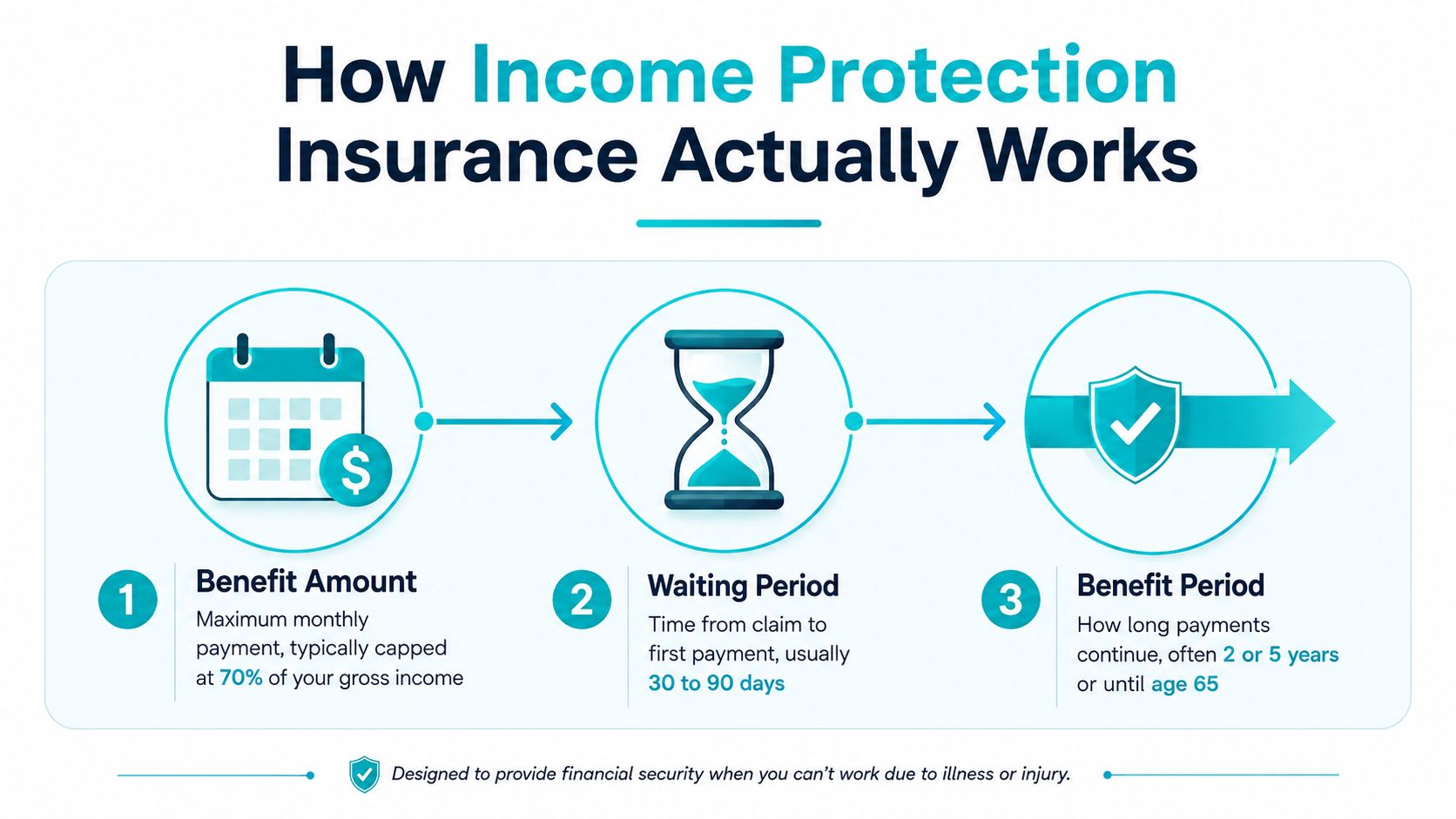
- Standard income protection insurance replaces up to 70% of your (pre-tax) income
Income Protection Insurance: Terms and Conditions
Private insurance providers must comply with the following:
- Industry standards
- Government regulations
- Consumer protection laws
Each provider sets their own premium rates, eligibility criteria, and unregulated policy terms. Typically, successful applicants must be:
- Permanent resident/citizen
- Employed/self-employed (20-30 hours per week)
- Aged 18-59
Individuals with certain stated occupations may be subject to stricter age restrictions and/or higher premiums.
Income Protection Insurance: Exemptions
Although these must be clarified with your potential providers during the ‘due diligence’ phase of sourcing and comparing quotes, most policies have the following caveats that automatically prevent any claim:
- Suspension from duties
- Pregnancy
- Criminal activity
- Self-harm
- Acts of war
Can I Afford to Ignore Income Protection Insurance?
The decision whether or not to purchase income protection insurance depends on your personal circumstances. Some factors to consider include:
- Fluctuating income/self-employment
Individuals with unstable incomes can experience significant financial issues if they lose their income due to illness or injury, especially the following:
- Freelancers
- Business owners
- Contractors
- Elevated living expenses/fiscal responsibilities
Individuals who should consider protecting themselves include those with:
- Mortgages
- Rent responsibilities
- Financial dependents
- Savings and emergency funds
Individuals who lack sufficient savings to cover expenses for an extended period must carefully consider the pros and cons of income protection.
- Health, occupational, and lifestyle risks
Individuals working in physically demanding jobs, or those who enjoy activities and lifestyles that inherently carry higher health risks, should consider a policy.
- Government support
Eligibility for workers’ compensation or other benefits is crucial to any decision about income protection.
Income Protection Insurance: Conclusion
All of us live in hope that we will never have to use insurance policies of any kind. They’re there to protect us when life doesn’t go according to plan, serving as a vital safety net that is hard to overstate.
It’s challenging to prioritise the policies we can’t afford to neglect. Hopefully, this article has highlighted how income protection insurance provides tangible protection for working individuals and families who rely on a primary source of income for everyday living.